
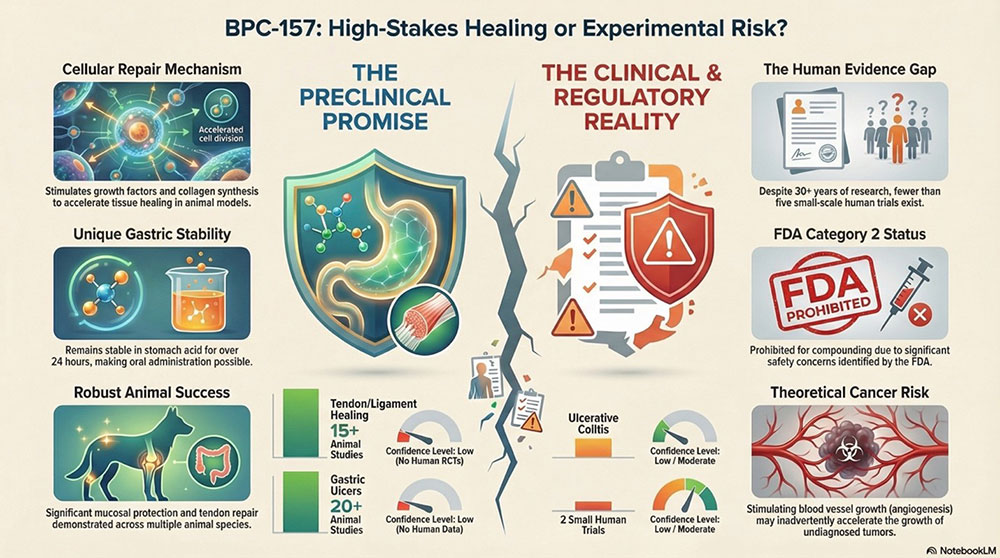
bpc-157 randomized controlled trial humans Wellness clinics promote the use of for recovery from injury or surgery. What do we know about it? It is effective in rodent models. Why might you think twice before using The Human Lab Rats Injecting
Description
In musculoskeletal research, BPC-157 has been characterised in transected tendon models, where it accelerates fibroblast outgrowth and collagen deposition, and in ligament-injury preparations where similar repair markers are documented

Erik Nielsen, J
(2) Preparation of Cagrilintide linear peptide crude peptide Take 4.49g of canagliptide peptide resin and add TFA mixed solution, the ratio of the mixed solution is TFA:EDT/Tis/phenol/H2O=87.5:2.5:5:5:2.5:2.5, and the dosage is 8ml/gram of resin

The peptide promotes osteoblast attachment, increases collagen synthesis in bone cells, and has demonstrated enhanced outcomes in ACL reconstruction studies in rats when administered via articular injection at 0.3 mg/mL


